


Relief for Back Pain and Sciatica
Do you experience pain when bending down or lifting objects? Are you experiencing pain in your leg or numbness in your foot? You could be suffering from back pain and sciatica. If you find yourself in pain, it’s time to see a physical therapist at Shoreline Physical Therapy.
Sciatica is often a debilitating condition that is a result of compression or inflammation of the sciatic nerve. The condition most commonly is associated with pain radiating down the leg. While “sciatica” may sound severe, it’s entirely curable.
If you are suffering from back pain or sciatica, you know how hindering it can be. It can be so severe that people struggle to do activities of daily living. Fortunately, we are experts at treating any back pain or sciatica you may be experiencing.
Contact Shoreline Physical Therapy today to schedule a consultation and learn more about how physical therapy can help you find relief!
What Is The Difference Between Back Pain And Sciatica?
Lower back pain starts in and around the spine itself. The source of the pain comes from injury or irritation of the muscles, joints (including the intervertebral discs and facet joints), nerves or surrounding ligaments, and other soft tissue.
Although sciatica is a commonly used term, it may also be confusing because it is sometimes used to describe any type of back or leg pain. But true sciatica refers to pain that radiates downwards from the lower back/buttock region along the course of the nerve into the thigh and lower leg.
Sciatica may include paresthesias (i.e., numbness and tingling), weakness in the muscles of the foot and lower leg. In severe cases, it can include changes to bowel and bladder function.
While back pain and sciatica can be intense, both are treatable with physical therapy, often within a few weeks. Even if you’ve suffered severe pain, there’s still hope!
Risk Factors For Back Pain And Sciatica
The team at Shoreline Physical Therapy is highly trained to find the root causes of your discomfort. We start with a whole-body assessment to determine the specific areas of concern, then use targeted therapies to develop a customized treatment program.
With these treatments, our physical therapists aim to provide a comprehensive approach to managing and alleviating neck and lower back pain. Our ultimate goal is to empower our patients with the knowledge and skills they need for a healthier, more active lifestyle free from pain.
The risk factors often associated with back pain are:
- Improper posture or prolonged positions (i.e., prolonged sitting)
- Spinal muscle and tissue damage (i.e., lifting strains or trauma from accidents)
- Limited hip, spine, and pelvis mobility
- Limited muscle flexibility
- Spinal/pelvic muscle weaknesses (aka “core” weakness)
- Poor abdominal, pelvic and back muscle coordination (i.e., compensations due to injury)
In most cases, sciatica is caused by a herniated lumbar disc where the nerve root is irritated and/or inflamed by disc material ruptured.
Risk factors for a herniated disk include:
- Smoking
- Repetitive lifting, bending and twisting
- Sedentary lifestyle
- Genetics
- Excess body weight
Physical therapy can help you identify what is causing your back pain and/or sciatica and resolve it successfully. The combination of education and activity modification can help set the stage for a successful outcome.


How Physical Therapy Can Help With Sciatica
If you’re experiencing back pain or sciatica, contact a physical therapist immediately. Your physical therapist will perform a thorough physical examination and provide you with solutions that work based on the finding.
Education
Understanding what is going on, and more importantly, what you can do about it, is one of the most effective solutions. Education seems small, but consistently it has been shown to help!
Stay active
It is essential to stay active despite the intensity of the pain. Your physical therapist can help you identify modifications to painful tasks and help you be safe and active.
Exercise
Supervised exercises are vital to a successful outcome. A physical therapist will tailor your exercises, monitor you, and progress you based on your individual needs.
Manual therapy
Physical therapists often use manual therapy for their patients with sciatica. Manual therapies include a variety of techniques that move one or more joints within normal ranges of motion to improve spinal joint motion or function. It can also include soft tissue techniques that help to alleviate pain and allow for more mobility and improved function.
Our therapists know the solutions that work. Supervised exercises that include movements, postural corrections, nerve mobilization, and/or strengthening effectively provide relief.
Starting physical therapy treatments early in the diagnosis is the best way to quickly improve and resolve your pain.
Schedule An Appointment Today
If you are suffering from back pain or sciatica, call Shoreline Physical Therapy today. Don’t live with the pain any longer – get relief with physical therapy!
Understanding the “Comprehensive Assessment”
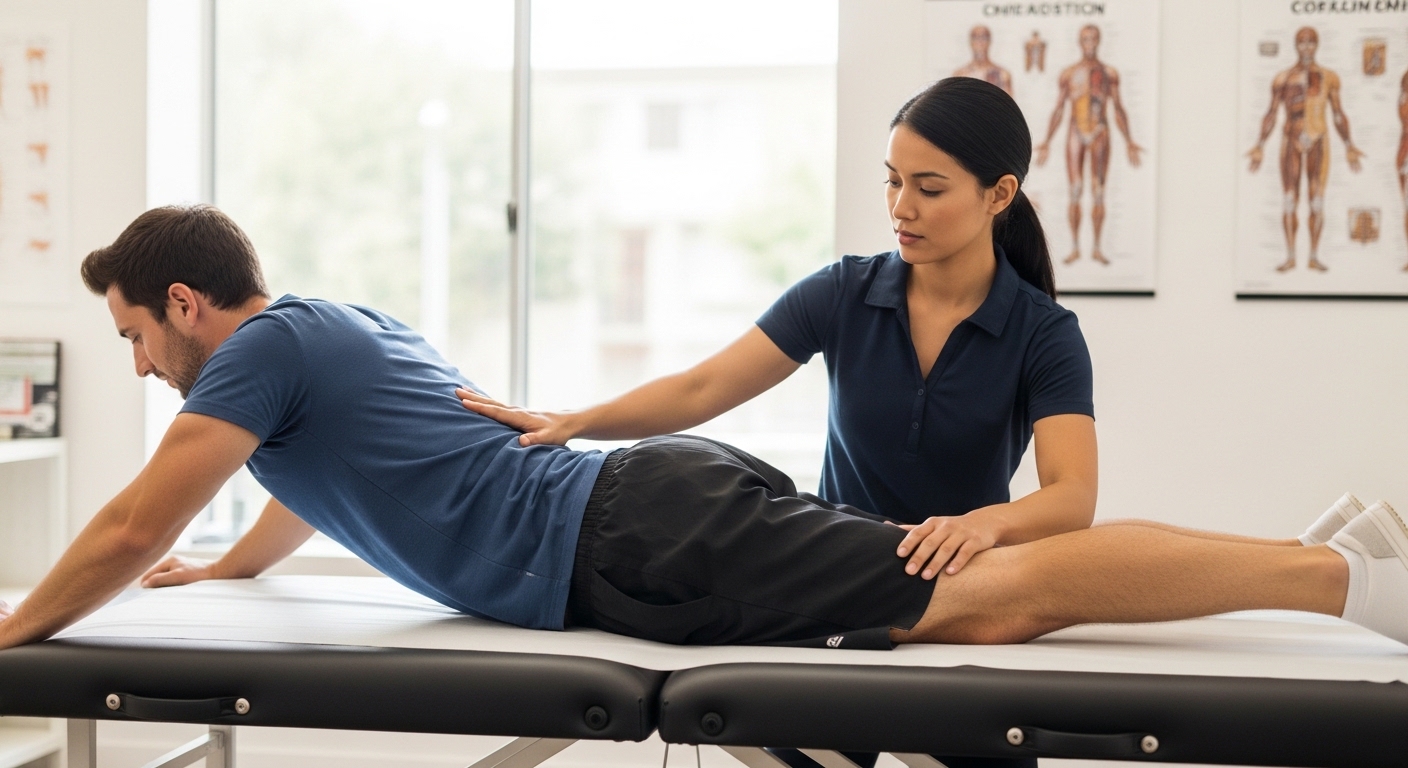
If you’ve been reading our newsletter for a while, you’ve probably seen us mention that we perform “comprehensive assessments” as the first step to treatment. These assessments are a crucial part of our process, as they allow us to better understand your symptoms, identify an underlying cause, and simply learn more about you.
But what exactly happens during these first-session evaluations? What can you expect? Today, we want to provide an in-depth overview so you can feel confident when you visit us for the first time!
The Basics
- Initial evaluations usually take between 30-60 minutes.
- Wear comfortable, loose-fitting clothes like those you’d wear to work out.
- Be sure to arrive 15 minutes early so we can take care of any necessary paperwork.
Part 1: Health History and Symptom Evaluation
We’ll start by taking a complete health history. This includes any diagnoses you have and a discussion about what brought you into the clinic in the first place. The more information you can share about your symptoms and/or condition, the better.
For example, if you’re experiencing pain, make sure to tell us…
- Where the pain is located and whether or not it moves around
- The exact sensations of the pain (aching, burning, etc.)
- Whether it’s accompanied by additional symptoms, like mobility restriction or swelling
If you suffered an injury, we’ll also ask for detailed information about what exactly you were doing and what the injury felt like.
Part 2: Time to Get Moving
Not only will we ask you to discuss your symptoms, but we’ll also ask you to perform simple screens so we can measure any impairments that might be affecting your condition. What exactly we look for will vary based on your health history, but we often evaluate the following:
- Range of motion
- Strength
- Balance
- Posture
- Walking pattern
- Specific functional movements like bending, squatting, kneeling, and reaching.
Don’t feel intimidated by these screens. We aren’t grading you on your abilities but instead trying to better understand your injury or condition so we can develop the best treatment plan for your needs.
Part 3: A Personalized Treatment Plan
In fact, that treatment plan is how we finish up your initial session. We’ll develop a customized program based on all the information we gathered throughout the appointment. That way, you’ll be ready to get started at your next session!
If you’re dealing with pain or discomfort, don’t put off visiting Shoreline Physical Therapy. Call us for an appointment today.
No Referral? No Problem!
You don’t need a doctor’s referral to start Physical Therapy! Direct Access allows you to skip the wait and get the care you need right away.
Don’t let pain or mobility issues slow you down—take the first step today!

Return to Your Sport as Quickly as Possible with Physical Therapy
Did you know that according to the U.S. Centers for Disease Control, over 2 million high school athletes suffer from sports-related injuries annually? Additionally, 3.5 million kids under the age of 14 also receive treatment for sports-related injuries annually. This doesn’t even include the number of adult athletes that get injured from a sport. At Shoreline Physical Therapy we take getting athletes back to their sports seriously. That’s why we employ both physical therapists and certified athletic trainers on our staff. Our staff members are experts in knowing the demands of sport and creating rehabilitation programs to meet those demands.
Whatever age you are, or level of physical ability you may have, physical therapy can help you in enhancing the healing process of a sports injury. With our sports injury rehabilitation programs, you will be able to get back to doing the activities you love in no time. If you are looking for a quick and easy way to get off the sidelines and return to your sport, give our office a call today to schedule an appointment with one of our highly trained physical therapists.
How will sports injury rehabilitation benefit me?
1. Physical therapy effectively treats injuries and helps to avoid future injuries.
Our physical therapists and athletic trainers are experienced and compassionate about helping others. They have a vast depth of insight on rehabilitation treatments, including prevention of future injuries. Physical therapists and athletic trainers are experts in movement, with the ability to identify factors contributing to your injury that you may not have even considered. This may include limitations on your range of motion, motor control impairment, or weakness of the core and extremity muscles. When these factors are addressed, your risk of injury significantly decreases.
2. Treatment plans are individualized to each patient.
Physical therapists and athletic trainers understand that no two athletes are the same – so no two treatment plans should be the same, either. Everyone experiences pain and injury differently, and everyone’s body recovers in different ways. After a thorough physical evaluation, your physical therapist will create a treatment plan based on your type of injury, stage of recovery, personal athletic goals, and any underlying conditions.
Your treatment plan will follow detailed steps all leading to your end goal: return to sport. For example, in the beginning stages of your recovery, your treatments will be focused on pain relief, inflammation reduction, and tissue healing. Once the pain is alleviated and the swelling is no longer present, you’ll move on to the next part of your treatment plan, focusing on restoring your strength, balance, endurance, and range of motion, in addition to activating your central nervous system.
If you were referred by a doctor or surgeon, your physical therapist will also take into account any special instructions you may have been given regarding physical activity. Our physical therapists and athletic trainers in Wilmington, NC will work closely with anyone else involved in the medical treatment and rehabilitation of your sports injury.
3. Physical therapy can help you avoid potentially harmful drugs or invasive surgeries.
Your physical therapist will create a treatment plan for you, based on your individual needs. Physical therapy is a natural and holistic approach to healing, including services such as:
- Modalities: This may include specialized treatments that your physical therapist has been certified to perform, such as ultrasound or electrical stimulation.
- Manual therapy: This may include soft tissue or joint mobilizations.
Physical therapy has been proven to be successful in treating both acute and chronic injuries, such as ligament sprains, muscle strains, plantar fasciitis, bursitis, tendinitis, and more. Your physical therapist will teach you about what your body is experiencing and the recovery process it will go through. Our rehabilitation team in Wilmington, NC will work together with you to help you reach your athletic goals, allowing you to be engaged and active in your rehabilitation.
Contact us today!
Physical therapy offers so much more than current symptom relief – it offers sports injury prevention and natural performance enhancement. If you are an athlete suffering from a sports-related injury, don’t waste any more time on the sidelines. Take your recovery to the next level with our physical therapy team. Confirm your appointment today and get started on the right track toward returning to the sport you love!
Exercise of the Month
Dead Bug
(Core, Lower Back)
Lie down on your back with your arms by your sides, your knees bent to 90-degrees, and your feet on the floor. Raise one arm up straight and one knee up towards the ceiling at the same time. Your arm should stay straight and be pointing straight up at the top and your knee should be at 90-degrees and be pointing straight up at the top. 3 Sets, 10 Reps.
Schedule An Appointment Today
If you are suffering from back pain or sciatica, call Shoreline Physical Therapy today. Don’t live with the pain any longer – get relief with physical therapy!

“Can’t say enough about Shoreline and Doug Miller MSPT. He was patient, thorough and spot on in diagnosing my hip pain. He taught me stretches and gave me the right exercises to do on my own at home. I followed his advice and with some patience and have been pain free for over 3 months. Great practice!” — N. L.
Naturally Relieve Your Aches & Pains Today With Our Free Ebooks!
Looking for ways to relieve your pain before seeing one of our physical therapists?
Dark Chocolate Bark
with Walnuts
& Dried Cranberries

INGREDIENTS:
- 1/2 cup California walnuts, chopped
- 12 oz semisweet chocolate chips
- 1/4 cup dried cranberries
- 1/2 tsp flaky sea salt
INSTRUCTIONS:
Preheat oven to 350° F. Spread the walnuts out on a baking sheet and toast for 8-10 minutes, shaking the baking sheet halfway through.
Microwave method: Add the chocolate chips to a microwave-safe bowl and microwave until melted in 30-second increments, stirring every 30 seconds. You can stop when the chocolate is mostly melted; the heat will melt the rest of the chips.
When the walnuts are toasted, remove them from the baking sheet and line the baking sheet with parchment paper. Use a spoon or pastry brush to spread the melted chocolate out on the parchment paper, until it’s about ⅛ of an inch thick. Sprinkle the melted chocolate with toasted walnuts, dried cherries and sea salt.
Let the bark cool, at room temperature or in the refrigerator, until fully hardened. Then break up the bark with your hands. Store in an airtight container in the fridge or freezer to avoid melting.
Free Consultation
Not sure if physical therapy at Shoreline Physical Therapy is right for you? We offer a free consultation to see if we would be a good fit for you! Schedule your appointment today!
Sources
- Sources: https://pubmed.ncbi.nlm.nih.gov/27285608/, https://www.cochranelibrary.com/cdsr/doi/10.1002/14651858.CD006555.pub2/full?highlight, bstract=back%7Cexercise%7Cpain%7Cexercis, https://www.ncbi.nlm.nih.gov/books/NBK507908/, https://pubmed.ncbi.nlm.nih.gov/33017565/, https://www.sciencedirect.com/science/article/pii/S1836955320300229?via%3Dihub, https://www.bmj.com/content/367/bmj.l6273