


Finding Neck Pain Relief At Shoreline Physical Therapy
Do you notice you have trouble turning your neck to look over your shoulder? Has holding your head up while sitting at your desk gotten harder and harder? What about at night, when you’re in bed trying to get comfortable enough to fall asleep? At Shoreline Physical Therapy, our physical therapists can help you find relief for your neck pain once and for all!
Neck pain is common among adults, affecting up to 70% at some point in their lives. Even small amounts of pain can impact your quality of life. Fortunately, physical therapy can help resolve the pains in your neck!
You don’t have to continue searching the internet for quick fixes for your problem. Your pain relief journey starts here! If you’re struggling with pain and discomfort in your neck, contact Shoreline Physical Therapy today to schedule your consultation.
What Causes Neck Pain?
There are several common causes of neck pain, including a car accident or a slip-and-fall. There are also less dramatic causes like sitting at a desk all day or waking up with a crick in your neck. No matter the event that started the pain, there are often underlying causes that set you up for persistent neck pain.
The most common causes of neck pain include sprains and strains on the muscles, tendons, and ligaments. For others, changes to the disc (i.e., a specialized tissue that sits between vertebrae throughout our spine) are the source of the pain.
Bulging and herniated discs are notoriously painful and common for people that experience nerve pain. Disc and cartilage degeneration can also lead to pain and difficulty moving the neck. Fortunately, our physical therapists are skilled at identifying the contributing factors and, more importantly, how to find relief.
When neck pain develops due to a pinched nerve, the pain can quickly develop into tingling or numbness in the hands, arms, and fingers. For others, nerve pain radiates upward, resulting in severe headaches, and in some cases, even migraine-like headaches.
If you’re experiencing chronic pain in your neck, know that there are safer options than surgery and medication that are available to you to combat your discomfort! The answer lies at our physical therapy clinic with our highly trained team.
Your Health, Your Choice!Did you know? You have the right to choose your Physical Therapy clinic! Many doctors refer to in-house clinics, but that doesn’t mean they’re the best fit for you. Take control of your care and choose the experts who put you first!
📞 CALL 910-604-6226 NOW
— No referral required! —
|

|
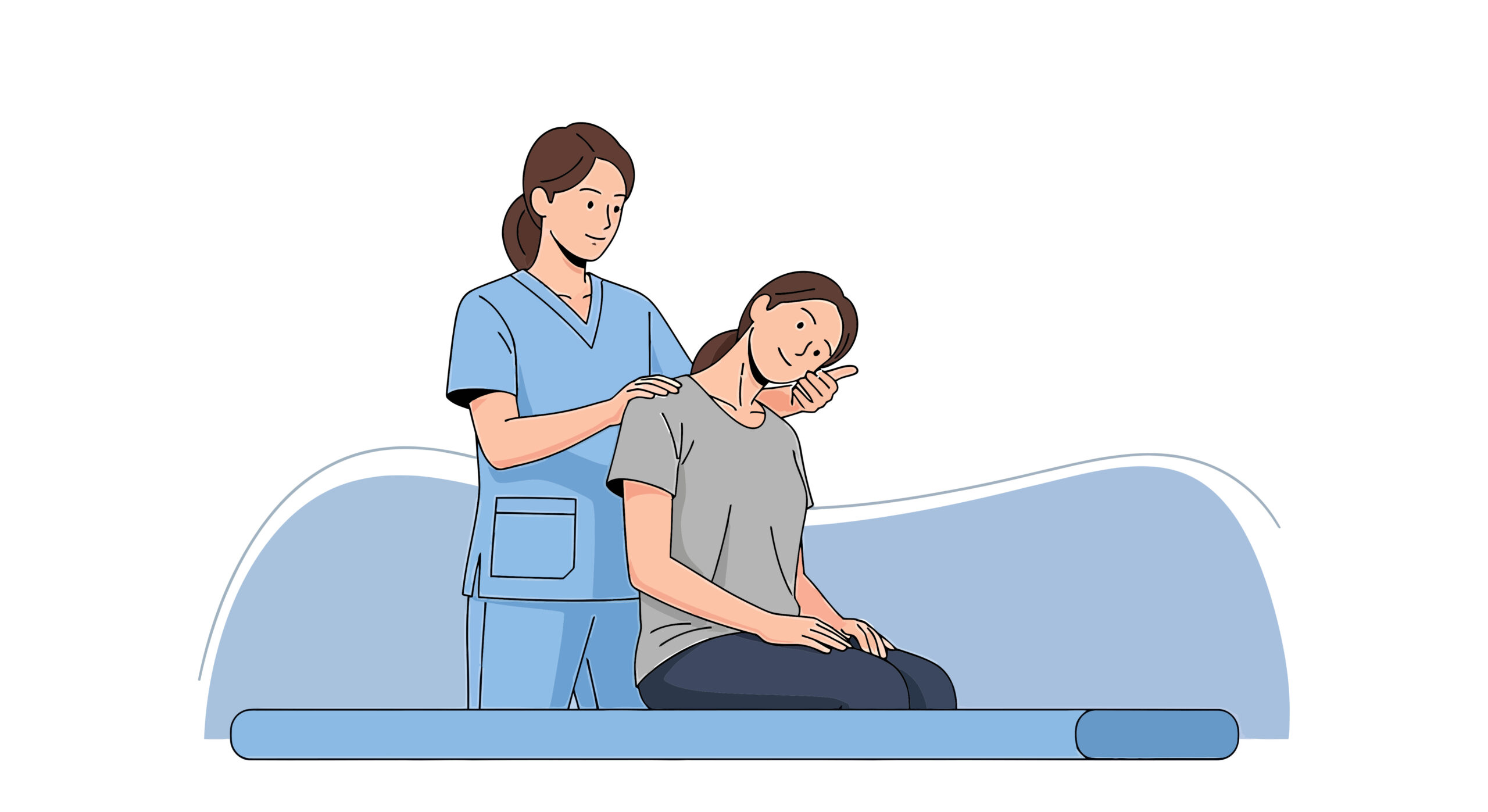
How Shoreline Physical Therapy Can Help You Find Relief
Our physical therapists will perform a thorough evaluation starting with your medical history and details about how, when, and where your symptoms began.
Next, we will analyze your posture and movement to identify the primary source of your neck pain and the best course of treatment for your individual needs.
Our treatment plans focus on relieving your pain and improving your posture, mobility, strength, etc., educating you about managing your symptoms. Your program will likely include manual therapy (i.e., soft tissue work and/or joint mobilizations), targeted stretches, exercises, activity modification, or posture recommendations.
Your therapy may also include additional methods deemed fit by your physical therapists, such as ice and heat therapies, ultrasound, or electrical stimulation.
The main emphasis of physical therapy is education and instruction on effective exercises and proper posture to resolve your current symptoms and possible future symptoms.
Each session, you will receive your therapist’s full attention. We’ll listen to your unique story and specific issues to help us understand your body’s needs and then work with our hands to improve the quality of your life. The main focus is your health and wellness goals.
We know which methods will be best for your recovery, and we’ll work together with you to understand the objectives and your overall expectations of therapy. The main goal is to get rid of your neck pain as soon as possible!
Request An Appointment Today!
Whether your discomfort is from a chronic condition or an injury, therapy can prove to be the greatest asset to your recovery.
Call Shoreline Physical Therapy today to schedule an appointment and get on the fast track to resolving your neck pain and getting back to doing what you love!
No Referral? No Problem!
You don’t need a doctor’s referral to start Physical Therapy! Direct Access allows you to skip the wait and get the care you need right away.
Don’t let pain or mobility issues slow you down—take the first step today!

Exercise of the Month
Neck Glide
(Neck)
Stand tall with your shoulders relaxed and your head in a neutral position. Gently draw your head straight backward, keeping your chin level, like you’re trying to make a double chin. Avoid tilting your head up or down. Hold briefly, then return to the starting position. 3 Sets, 10 Reps. (Materials needed: none)

The Importance of Home Exercises for Recovery
Home exercises prescribed by your physical therapist play a crucial role in the recovery process for various musculoskeletal injuries and conditions. Studies show that consistent adherence to home exercise programs significantly improves functional outcomes and reduces the risk of re-injury.
With rotator cuff injuries, patients who diligently followed their prescribed home exercise regimen experienced better shoulder function and decreased pain levels compared to those who were less compliant.
Positive mental health is a big part of a successful recovery. Active participation in home exercises can provide patients with a sense of empowerment and ownership over their recovery journey. When patients take an active role in their rehabilitation, it fosters a positive mindset and motivation towards achieving their goals.
Our PTs will educate you on the proper technique for each prescribed exercise so you can optimize your recovery without missing a beat.
Source: https://www.physio-pedia.com/Adherence_to_Home_Exercise_Programs

Tips for Parents as School Ends and Summer Begins
As summer break approaches, parents can prepare for their kids being out of school with these practical tips:
- Plan Activities: Organize a list of summer activities to keep kids engaged, such as outdoor sports, art projects, or day trips to parks and museums.
- Set a Routine: Maintain a structured daily routine with regular wake-up times, meal schedules, and designated study or reading periods to promote consistency.
- Healthy Eating: Stock up on nutritious snacks and plan balanced meals to keep kids energized and healthy throughout the summer.
- Safety First: Ensure your home and outdoor play areas are safe and child-proofed. Discuss safety rules with your children, especially if they spend more time outside.
- Screen Time Limits: Set reasonable limits on screen time to encourage physical activity and reduce excessive device usage.
By following these tips, parents can create a balanced and enjoyable summer experience for their children, combining fun, learning, and safety throughout the break.
Mechanical Diagnosis and Therapy (McKenzie Method)
The McKenzie Method of Mechanical Diagnosis and Therapy (MDT) is world-renowned for the assessment and treatment of musculoskeletal disorders and has been widely used for more than 50 years. If a problem exists in or around the spine or peripheral joint, an MDT evaluation may be appropriate. The assessment process is safe and reliable, and it allows the clinician to reach an accurate diagnosis which then leads to the appropriate, most effective treatment plan. In fact, 80% of the time, and accurate MDT assessment will reveal simple patterns of movement that will rapidly reduce a patient’s pain and improve daily function with most of the improvement occurring in the first 2 weeks of treatment. These results are possible even in the presence of abnormal MRI findings or chronic pain.
Assessment:
The assessment provides a rational guide to classify the presenting musculoskeletal disorder into a mechanical sub-classification. Proper classification is essential to determine the most optimal treatment strategy for the patient. First the clinician will carefully and thoroughly listen to the patient describe the symptoms they are having in order to understand the exact location of pain and determine what activities and positions make the patient better or worse. This information guides the clinician during the rest of the assessment and gives the clinician an understanding of how the pain is limiting the patient’s daily activity and quality of life. Next, the clinician will perform a response-based assessment by guiding the patient through a series of simple, repeated movements.
During the response-based assessment, the clinician is able to identify patterns of changes in movement and pain that can be used to categorize the problem into the appropriate sub-classification. These patterns are reproducible, objective, reliable, and reflect the characteristics of the underlying pain generator. Furthermore, this response-based assessment is performed at each subsequent visit to detect changes in the patient’s presentation and further guide treatment progression.
Treatment:
Using the information gathered during the assessment, the clinician will prescribe specific exercises for the patient to perform at home and will instruct the patient on certain movements and postures to avoid. MDT treatment focuses on teaching the patient how to treat themselves with movement several times a day. Follow-up visits in the clinic are designed to re-assess the patient’s response to self-treatment and make the appropriate progressions to further improve their condition. Typically, patients are able to successfully treat themselves when given the necessary knowledge and tools. However, when these mechanical problems are more severe, it may be necessary for the clinician to utilize more hands-on techniques until the patient is able to better self-manage the condition.
Additionally, as patients improve they are given specific strengthening programs to improve function at home and work. In cases when a patient does not respond mechanically, alternative means of treatment or further medical evaluation are warranted. Treatment using MDT is centered around you, the patient, being actively involved. When a patient is treating themselves five or six times daily, they are more likely to resolve their problem in a much shorter period of time than they would if they were being seen in the clinic two or three days a week without self-treatment. Not only does MDT treatment result in a more rapid recovery (remember a majority of patients can rapidly reduce their pain in as little as 2 weeks), it also can substantially reduce the costs associated with care ( clinic visits, less out of pocket expense to the patient, less need for further expensive imaging studies).
Prevention:
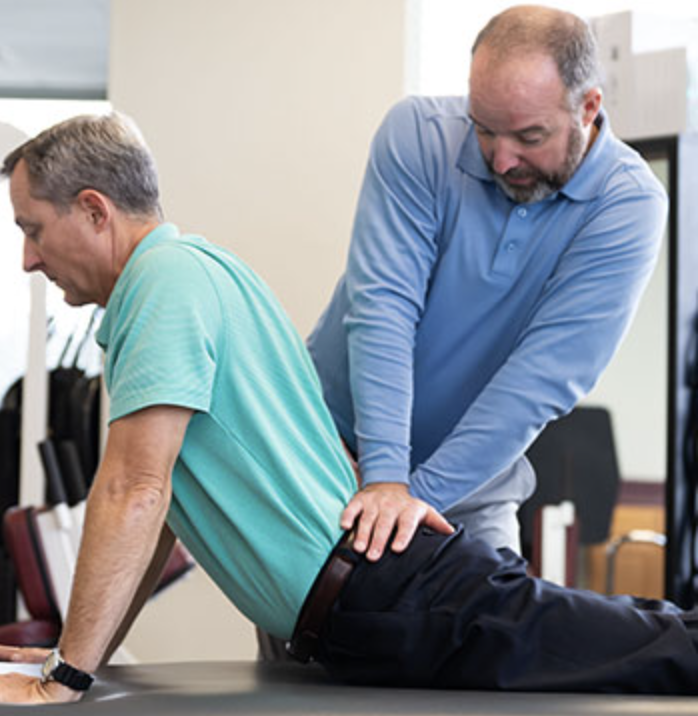
As previously stated, most patients who respond favorably to the McKenzie Method can successfully treat themselves. By learning how to self-treat the current problem, patients gain hands-on knowledge on how to minimize the risk of recurrence and how to quickly manage themselves if symptoms do recur. Before discharge from physical therapy, patients are taught simple prophylactic exercises and postures that can reduce the chance of the symptoms returning substantially. In addition, the therapists at Shoreline Physical Therapy are always available after discharge to help the patient troubleshoot any future issues.
Find Lasting Relief from Neck Pain
Are stiffness and aches making it hard to look over your shoulder, focus at your desk, or get a good night’s sleep? At Shoreline Physical Therapy, our experts are trained to identify the root cause of your neck discomfort. Whether it’s from poor posture, an old injury, or a pinched nerve, our customized physical therapy programs will help relieve your pain, improve your mobility, and give you the tools you need to stay pain-free. Don’t let neck pain control your life!

“Can’t say enough about Shoreline and Doug Miller MSPT. He was patient, thorough and spot on in diagnosing my hip pain. He taught me stretches and gave me the right exercises to do on my own at home. I followed his advice and with some patience have been pain free for over 3 months. Great practice!” — N. L.

Naturally Relieve Your Aches & Pains Today With Our Free Ebooks!
Looking for ways to relieve your pain before seeing one of our physical therapists?
Liz’s Bistro Salad

INGREDIENTS:
- 1 red onion, thinly sliced
- 1/4 cup white or red wine vinegar
- 1/2 cup water
- A pinch of salt and sugar
- 1 romaine heart, stem removed and chopped
- Half a head of butter lettuce, stem removed, gently torn
- 2 tablespoons fresh minced tarragon
- 1/2 cup fresh dill, chopped or torn
- 1/4 cup fresh chives, minced
- 1/2 cup olive oil
- 3 tablespoons lemon juice
- 3/4 teaspoon salt
- 1 teaspoon sugar
- 1 teaspoon dijon mustard or mayo
INSTRUCTIONS:
- Pickled Onions: Place the onions in a jar; fill the jar about a third of the way with vinegar, then fill to the top of the onions with water. Add salt and sugar, shake, and keep in the fridge for a few hours or a few days.
- Vinaigrette: Shake all dressing ingredients in a jar. It should be pleasantly bright and mellow – remember we’ll be adding a bunch of onions and herbs to the salad, so it’s okay for this dressing to be pretty chill. Keep this in the fridge if making ahead.
- Salad: Prep all your salad greens – chop the romaine and the herbs, and gently tear the lettuce leaves into bite sized pieces.
- Toss: Just before serving, toss greens, herbs, pickled onions, and dressing together – starting with about half of the dressing that’s in the jar, and adding more as necessary.
- Serve: Taste and adjust; add salt and pepper to taste. It’s tender, bright, a little puckery, and so fresh.
Free Consultation
Not sure if physical therapy at Shoreline Physical Therapy is right for you? We offer a free consultation to see if we would be a good fit for you! Schedule your appointment today!