


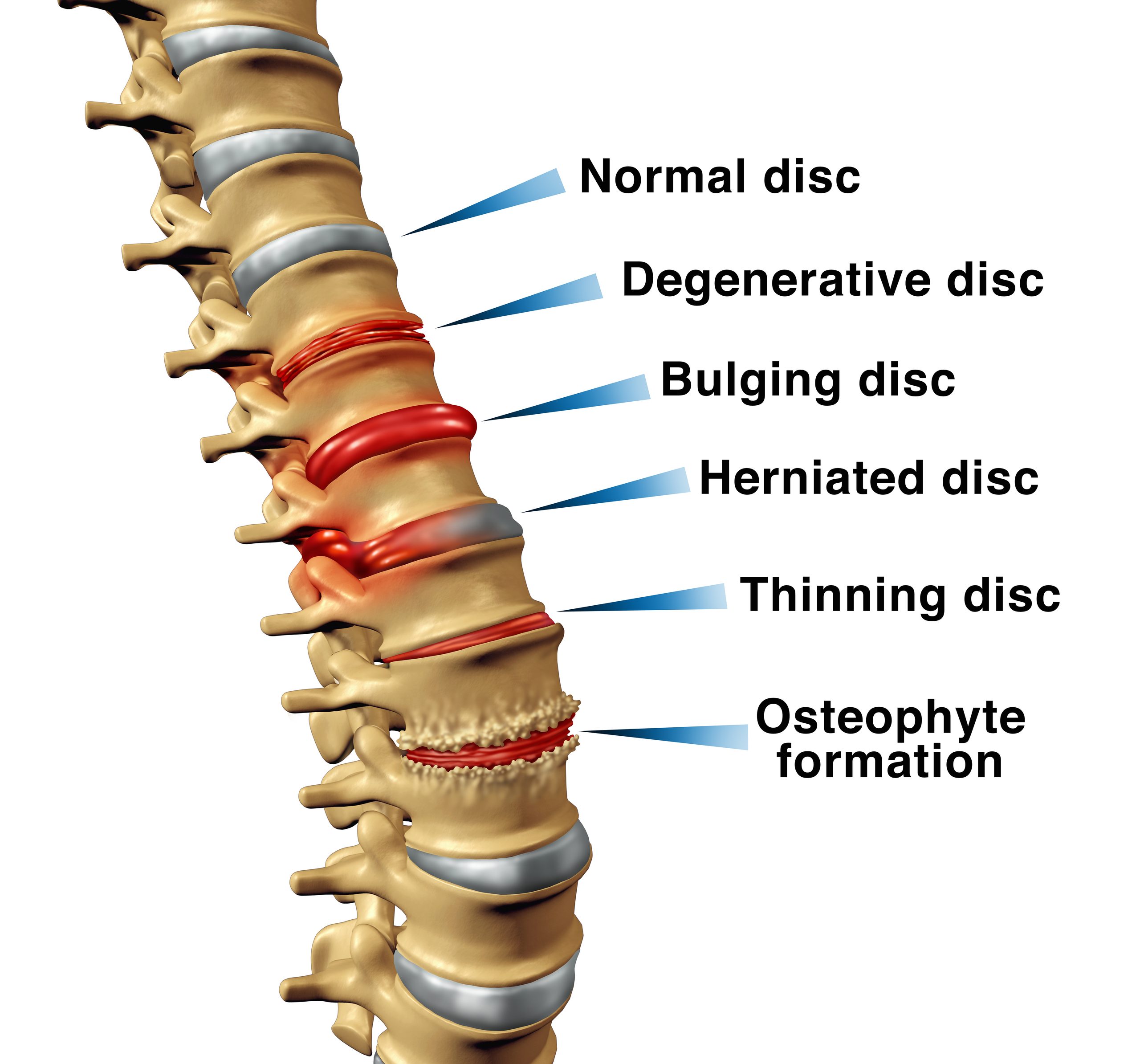
What’s Degenerative Disc Disease?
Plus: How To Know You Have it, and What PT Can Do To Help
There’s no denying that your body changes as you get older. While some of these changes are visible–such as streaks of gray in your hair–others can happen behind the scenes. One example of the latter is the degenerative changes in the spine.
We’ve come to call those changes “degenerative disc disease” (DDD), but it’s important to realize that DDD isn’t really a disease. It’s a normal part of the aging process, and experiencing this degeneration doesn’t necessarily mean you’ll experience pain or discomfort.
However, if you do start to experience symptoms, Shoreline Physical Therapy is here to help. For most people, physical therapy is one of the most effective ways of managing DDD–better even than drugs or surgery. With some targeted strengthening exercises, hands-on pain management approaches, and simple postural corrections, you’ll be on your way to living a pain-free life.
Call us today to learn more.
An Overview of Degenerative Disc Disease
Nestled between the vertebrae of your spine are your spinal discs. These flexible discs cushion your spinal bones, preventing them from rubbing against each other and acting as shock absorbers for your spine.
As you get older, these cushions start to dry out. When you’re young, the discs are like grapes, but as we get older, they become more like raisins. In some cases, the degeneration itself might begin to cause pain, typically in either your lower back or neck. This pain is typically chronic (meaning it lasts for several months) and may tend to worsen when…
- You’ve been sitting for an extended period
- You rotate or bend your spine
- You lift an object
Degenerative disc disease can also increase the likelihood that you’ll suffer a herniated disc, which will also cause pain. Do keep in mind that a herniated disc is a separate condition from DDD, however. It occurs when the disc in your spine bulges or ruptures and irritates the nearby nerves.
The good news is that you can slow this natural aging process by staying active, keeping your core muscles strong, and practicing proper posture–all things our PTs can help you achieve!
What Can Our Physical Therapists Do to Manage DDD?
The good news about DDD is that, except for extreme cases, you will not need to undergo any surgeries or other major medical procedures to manage your condition. Physical therapy is a frontline treatment for DDD, helping to minimize the impact of the degenerative changes while offering drug-free pain management.
Here are some of the interventions we use to manage degenerative disc disease:
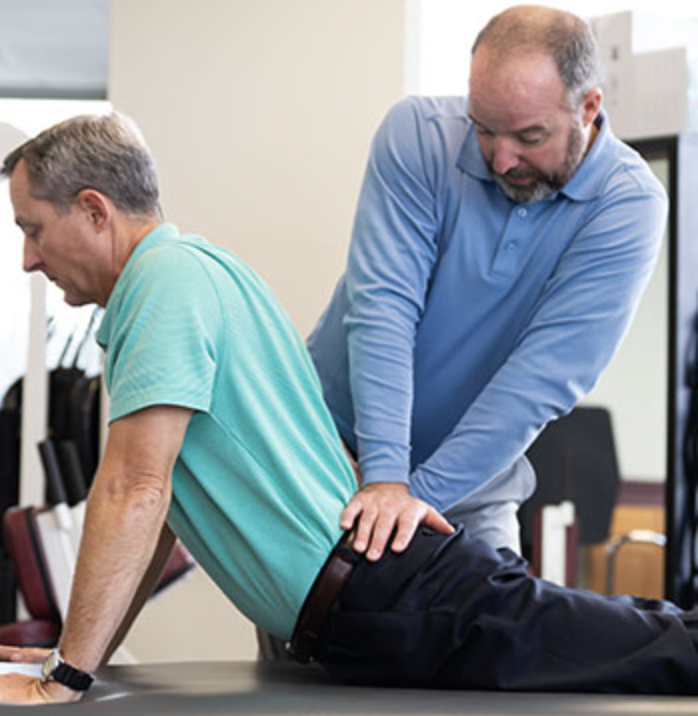
- Manual Therapy: Manual therapy is a set of hands-on treatments designed to reduce pain, improve mobility, and promote blood circulation. For DDD, we might utilize spinal mobilizations, which involve moving individual spinal joints to reduce pain and improve range of motion.
- Mobility Exercises: Improving your overall mobility through stretches and other exercises also helps reduce back pain from DDD.
- Core Strengthening: A strong core is one of the best ways to manage DDD! Your core muscles help support and stabilize your spine, helping to reduce pressure placed on your degenerative discs. We’ll set you up with a progressive program that gradually builds in intensity as you improve.
- General Exercise: A low-impact aerobic exercise program is crucial in managing DDD. Our therapists will work with you to find the exercises (such as walking or swimming) that best suit your needs and interests. We can show you how to gradually incorporate exercise so it becomes a regular habit.
- Postural Education: Sometimes, adjusting how you sit, stand, bend over, or lift heavy objects can help relieve pain from DDD. We’ll provide personalized information that speaks to your unique needs.
Don’t Let Degenerative Disc Disease Hold You Back!
Just because degenerative disc disease is a natural part of aging doesn’t mean you have to live with chronic or persistent back pain. Studies show that staying active will help reduce pain in the long run–but it can be a little difficult to start.
Fortunately, the Shoreline Physical Therapy physical therapists have your back–literally! With expert, personalized guidance, you’ll be back to your favorite activities in no time!
Sources: https://www.choosept.com/guide/physical-therapy-guide-degenerative-disk-disease, https://www.sciencedirect.com/science/article/pii/S204908012200379X, https://www.ncbi.nlm.nih.gov/books/NBK448134/
Your Health, Your Choice!Did you know? You have the right to choose your physical therapy clinic! Many doctors refer to in-house clinics, but that doesn’t mean they’re the best fit for you. Take control of your care and choose the experts who put you first!
📞 CALL 910-604-6226 NOW
— No referral required! —
|

|
Building Muscle is the Fountain Of Youth
Ponce de León may have thought he could find the fountain of youth in Florida, but the Shoreline Physical Therapy physical therapists know the truth: the real fountain of youth is increasing muscle mass!
As you get older, once-easy movements become challenging. You don’t stay balanced as easily. Your fall risk increases. You struggle with joint pain and a restricted range of motion. The older you get, the more of a struggle it becomes to stay independent.
While there’s no way to truly reverse aging, you can slow the process through exercise. All exercise has benefits, but strength training, in particular, is tremendously important in maintaining a high quality of life through your 70s, 80s, and beyond.
Combatting Sarcopenia with Strength Training
One of the reasons older people struggle with mobility and balance issues is sarcopenia, a decrease in muscle mass that occurs as we age. Many age-related conditions (including degenerative disc disease) have decreased muscle mass at their root.
Fortunately, you can combat sarcopenia with strength training sessions. By continually working your muscles well into old age, you retain the tissue that allows you to stay youthful, mobile, and independent.
Our PTs will help you find the strength training exercises that best suit your needs. You have several options, including:
- Bodyweight exercises (like planks or lunges)
- Using resistance bands
- Using weight machines
- Lifting free weights like dumbbells or barbells
Call Shoreline Physical Therapy today to learn more about getting started with strength training!
Sources: https://www.nia.nih.gov/news/how-can-strength-training-build-healthier-bodies-we-age
No Referral? No Problem!
You don’t need a doctor’s referral to start physical therapy! Direct Access allows you to skip the wait and get the care you need right away.
Don’t let pain or mobility issues slow you down—take the first step today!

|

Kids Heading Back to School? Here’s How to Help Them Avoid Back Pain
Between laptops, tablets, and old-fashioned textbooks, heavy backpacks are a reality for anyone starting school this fall (including the teachers!). Improper backpack usage can contribute to back pain, particularly in the upper back–but a few simple tips will help keep your kids pain-free this school year.
- Find a backpack that fits. Most kids choose backpacks for their coolness factor, not their size, but it’s important your child’s backpack is the right fit for them. A properly fitting (and properly filled) backpack should rest on the hips, not the shoulders.
- Don’t go too heavy. A backpack shouldn’t exceed 10% of your child’s body weight. Bust out the bathroom scale to ensure your child isn’t overloading their pack!
- Encourage good posture. Help your child find their ideal posture by asking them to lift their chest/sternum up toward the sky, which helps their spine settle into proper alignment.
Want more back-to-school backpack tips? Call Shoreline Physical Therapy to schedule a personalized assessment to help identify any areas of weakness or impairment that might be contributing to backpack-related discomfort–and strategies for resolving them!
Exercise of the Month
Modified Push Up
(Chest, Arms, Core)
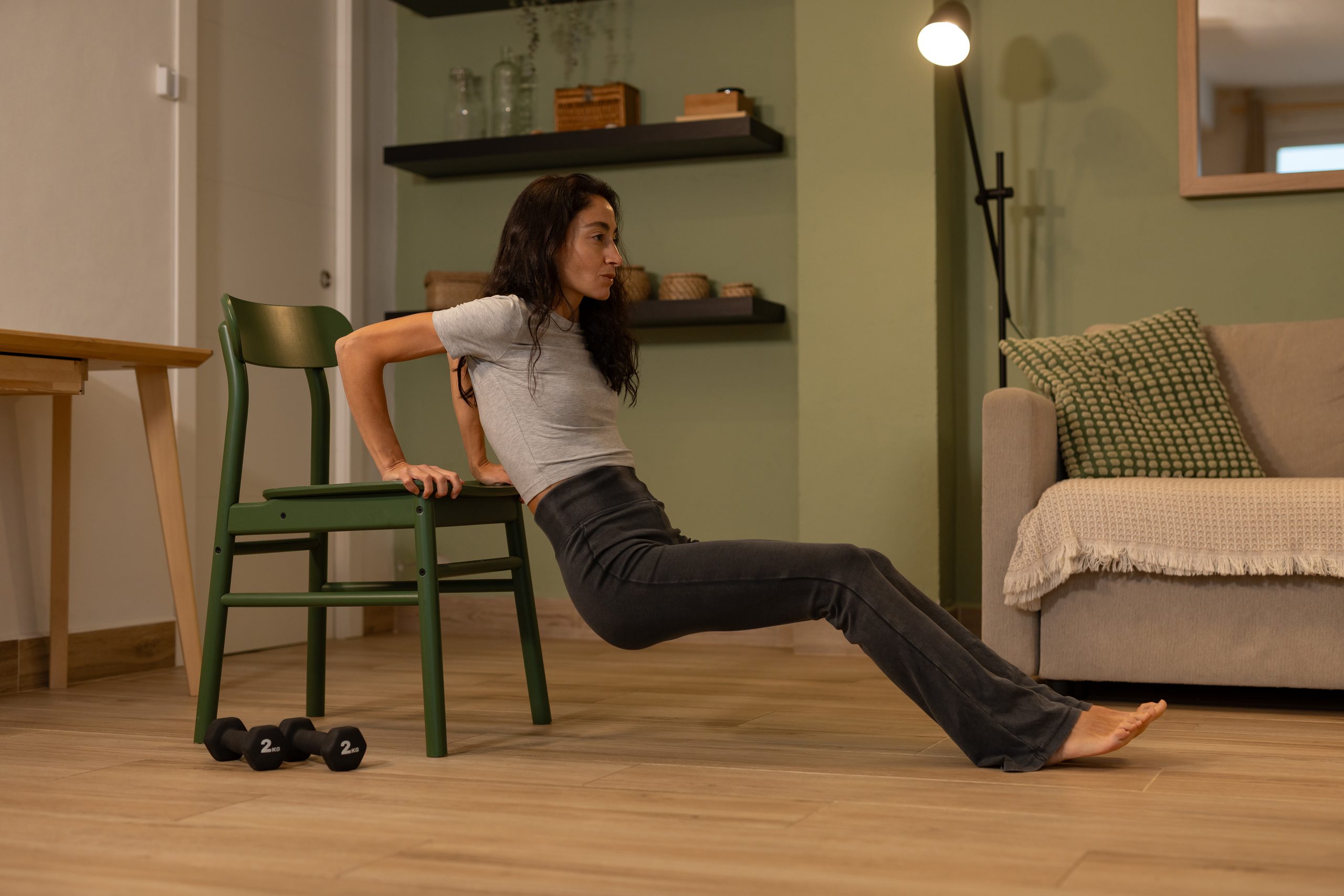
Start in a kneeling position with your hands placed slightly wider than shoulder-width apart on the floor. Walk your hands forward and shift your weight so your body forms a straight line from your knees to your head. Lower your chest toward the floor by bending your elbows, keeping your core engaged. Push back up to the starting position. 3 Sets, 10 Reps. (Materials needed: floor mat)
Ready to Find Relief from Degenerative Disc Disease?
Living with back or neck pain doesn’t have to be your new normal. Contact Shoreline Physical Therapy today to schedule an evaluation with our expert physical therapists. We’ll work with you to create a personalized, drug-free plan to strengthen your core, improve your mobility, and get you back to the activities you love!

“I highly recommend Shoreline Physical Therapy. Following my knee replacement, I had an excellent experience with Jai, Doug, and Megan, who helped get me back to normal. They are very experienced, professional, and effective in the therapy they provide.” — R. M.
Naturally Relieve Your Aches & Pains Today With Our Free Ebooks!
Looking for ways to relieve your pain before seeing one of our physical therapists?
Mechanical Diagnosis and Therapy (McKenzie Method)
The McKenzie Method of Mechanical Diagnosis and Therapy (MDT) is world-renowned for the assessment and treatment of musculoskeletal disorders and has been widely used for more than 50 years. If a problem exists in or around the spine or peripheral joint, an MDT evaluation may be appropriate. The assessment process is safe and reliable, and it allows the clinician to reach an accurate diagnosis which then leads to the appropriate, most effective treatment plan. In fact, 80% of the time, and accurate MDT assessment will reveal simple patterns of movement that will rapidly reduce a patient’s pain and improve daily function with most of the improvement occurring in the first 2 weeks of treatment. These results are possible even in the presence of abnormal MRI findings or chronic pain.
Assessment:
The assessment provides a rational guide to classify the presenting musculoskeletal disorder into a mechanical sub-classification. Proper classification is essential to determine the most optimal treatment strategy for the patient. First the clinician will carefully and thoroughly listen to the patient describe the symptoms they are having in order to understand the exact location of pain and determine what activities and positions make the patient better or worse. This information guides the clinician during the rest of the assessment and gives the clinician an understanding of how the pain is limiting the patient’s daily activity and quality of life. Next, the clinician will perform a response-based assessment by guiding the patient through a series of simple, repeated movements.
During the response-based assessment, the clinician is able to identify patterns of changes in movement and pain that can be used to categorize the problem into the appropriate sub-classification. These patterns are reproducible, objective, reliable, and reflect the characteristics of the underlying pain generator. Furthermore, this response-based assessment is performed at each subsequent visit to detect changes in the patient’s presentation and further guide treatment progression.
Treatment:
Using the information gathered during the assessment, the clinician will prescribe specific exercises for the patient to perform at home and will instruct the patient on certain movements and postures to avoid. MDT treatment focuses on teaching the patient how to treat themselves with movement several times a day. Follow-up visits in the clinic are designed to re-assess the patient’s response to self-treatment and make the appropriate progressions to further improve their condition. Typically, patients are able to successfully treat themselves when given the necessary knowledge and tools. However, when these mechanical problems are more severe, it may be necessary for the clinician to utilize more hands-on techniques until the patient is able to better self-manage the condition.
Additionally, as patients improve they are given specific strengthening programs to improve function at home and work. In cases when a patient does not respond mechanically, alternative means of treatment or further medical evaluation are warranted. Treatment using MDT is centered around you, the patient, being actively involved. When a patient is treating themselves five or six times daily, they are more likely to resolve their problem in a much shorter period of time than they would if they were being seen in the clinic two or three days a week without self-treatment. Not only does MDT treatment result in a more rapid recovery (remember a majority of patients can rapidly reduce their pain in as little as 2 weeks), it also can substantially reduce the costs associated with care ( clinic visits, less out of pocket expense to the patient, less need for further expensive imaging studies).
Prevention:
As previously stated, most patients who respond favorably to the McKenzie Method can successfully treat themselves. By learning how to self-treat the current problem, patients gain hands-on knowledge on how to minimize the risk of recurrence and how to quickly manage themselves if symptoms do recur. Before discharge from physical therapy, patients are taught simple prophylactic exercises and postures that can reduce the chance of the symptoms returning substantially. In addition, the therapists at Shoreline Physical Therapy are always available after discharge to help the patient troubleshoot any future issues.
The goals of the McKenzie Method in Wilmington, NC are to:
- Reduce pain and deformity
- Maintain the reduction with education and posture advice
- Restore full function
- Prevent recurrences
The McKenzie Method Treats:
Utilizing the McKenzie Method, we are able to successfully treat most musculoskeletal disorders including:
- Acute or chronic neck and back pain
- Herniated “slipped” discs
- Degenerative disc disease
- Degenerative arthritis
- Sciatica
- Stenosis
- Radiculopathy (pain radiating down the arm or leg)
- Degenerative Joint Disease
- Upper and lower extremity joint pain and ROM loss
- Tendinitis
For more information, Contact us today in Wilmington, NC.
Old Charleston-Style Shrimp and Grits

INGREDIENTS:
- 3 cups water
- 2 teaspoons salt
- 1 cup coarsely ground grits
- 2 cups half-and-half
- 2 pounds uncooked shrimp, peeled and deveined
- salt to taste
- 1 pinch cayenne pepper, or to taste
- 1 medium lemon, juiced
- 1 pound andouille sausage, cut into 1/4-inch slices
- 5 slices bacon
- 1 medium green bell pepper, chopped
- 1 medium red bell pepper, chopped
- 1 medium yellow bell pepper, chopped
- 1 cup chopped onion
- 1 teaspoon minced garlic
- ¼ cup butter
- ¼ cup all-purpose flour
- 1 cup chicken broth
- 1 tablespoon Worcestershire sauce
- 1 cup shredded sharp Cheddar cheese
DIRECTIONS:
- Gather all ingredients. Bring water and 2 teaspoons salt to a boil in a heavy saucepan over medium-high heat.
- Whisk grits into the boiling water, and then whisk in half-and-half. Reduce heat to medium-low and simmer, stirring occasionally, until grits are thickened and tender, 15 to 20 minutes. Set aside and keep warm.
- Season shrimp with salt and cayenne pepper. Add lemon juice, toss to combine, and set aside to marinate.
- Place sausage slices in a large skillet over medium-high heat. Cook, stirring occasionally, until browned, 5 to 8 minutes. Remove sausage from the skillet.
- Add bacon to the same skillet. Cook over medium-high heat until evenly browned, about 5 minutes per side. Transfer bacon to paper towels to drain, then chop or crumble when cool enough to handle. Leave bacon drippings in the skillet.
- Add bell peppers, onion, and garlic to the bacon drippings; cook and stir until onion is translucent, about 8 minutes.
- Stir cooked sausage and marinated shrimp into the skillet with the cooked vegetables. Turn off the heat and set aside.
- Melt butter in a small saucepan over medium heat. Whisk in flour, stirring to create a smooth roux. Turn heat to low and cook, stirring constantly, until mixture is golden brown in color, 8 to 10 minutes. Watch carefully, mixture burns easily.
- Pour the roux over the sausage, shrimp, and vegetables.
- Place the skillet over medium heat, add chicken broth, bacon, and Worcestershire sauce, and stir to combine. Cook until sauce thickens up and shrimp turn opaque and bright pink, about 8 minutes.
- Just before serving, mix Cheddar cheese into grits; stir until cheese is melted and grits are creamy and light yellow.
- Spoon grits onto plates and serve shrimp mixture over top.
- Serve and enjoy!
Free Consultation
Not sure if physical therapy at Shoreline Physical Therapy is right for you? We offer a free consultation to see if we would be a good fit for you! Schedule your appointment today!