


If you’ve ever suffered a shoulder injury, then you know how debilitating it can be. Not only are you experiencing persistent pain, but most shoulder injuries also restrict the range of motion in the joint, making day-to-day tasks — from grabbing a cup off the high shelf to brushing your hair — feel nearly impossible.
At Shoreline Physical Therapy, our team of physical therapists will work with you to identify and resolve the underlying causes of your shoulder pain. We offer acute pain relief and can guide you through a complete shoulder rehabilitation regardless of whether or not you require surgery — and often, you can resolve a shoulder injury with physical therapy alone!
But that process can take a while, and we want to help you avoid shoulder injuries, too. While we do incorporate injury prevention information into our rehab programs, it’s never a bad time to start incorporating small changes into your routine that can help prevent shoulder pain.
What Causes Shoulder Pain and Injury, Anyway?
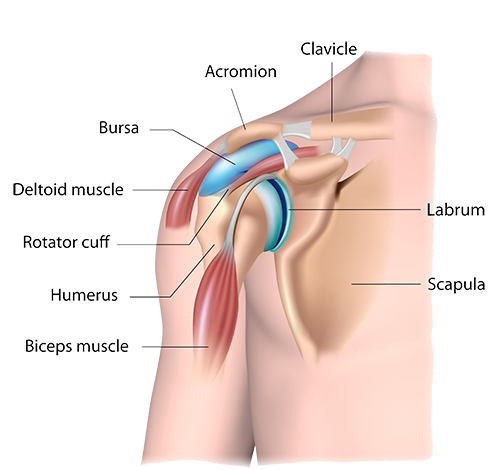
Your shoulder is an incredibly complex ball-and-socket joint with several moving parts, including:
• Three separate bones: the humerus (arm bone), scapula (shoulder blade), and clavicle (collarbone)
• Cartilage that wraps and protects these bones from rubbing against each other
• Three main ligaments that connect your shoulder’s bones
• A collection of muscles and tendons known as the rotator cuff that wrap and support the shoulder joint
• Bursae: small fluid-filled sacs that protect your tendons
Damaging any of these structures can lead to shoulder pain, weakness, and immobility. Some people injure their shoulders through sudden, acute injuries, especially if they’re active — a hard fall on the football field could tear your rotator cuff or dislocate the arm bone out of your shoulder socket.
However, many shoulder injuries are actually overuse injuries, meaning the pain and immobility symptoms occur due to repeated micro-injuries in your shoulder’s tissue. Often, sports-related shoulder injuries are actually due to overuse, as repeated overhead motions (such as throwing a ball or certain swimming strokes) put stress on the shoulder joint, leading to symptoms.
Using improper form can also contribute to overuse injuries, as can having improper posture — a weak upper back strains your shoulder muscles, making them do more work than needed.
Preventing shoulder pain is really about preventing these overuse injuries. By making small changes, you can keep your shoulders strong, healthy, and pain-free!
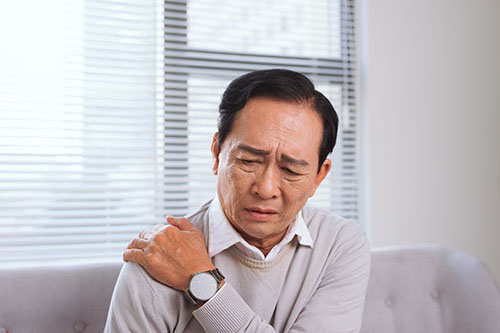


Five Ways You Can Help Prevent Shoulder Pain
- Strengthen your upper body: Strong upper back and shoulder muscles are better able to provide the shoulder joint with the support and stability it needs, meaning you’ll be less likely to suffer an injury. Not sure how to get started? Our PTs can walk you through some appropriate exercises.
- Keep your mobility: We can show you simple range of motion exercises that will get the blood flowing to your joints, keeping them healthy. Reaching overhead, across your body, or behind your back are all basic stretches that can do wonders — just make sure you never force a movement!
- Don’t forget to warm up first: Many popular recreational activities put you at risk for a shoulder injury, including swimming, pickleball, and tennis. It’s crucial that you warm up your shoulder before you dive in. Try some quick cardio paired with active shoulder stretches (like arm circles).
- Maintain proper posture: Proper posture isn’t about standing up straight all the time; it’s about maintaining postural awareness and keeping your spine in alignment no matter what you’re doing. And if you have a sedentary job, move around regularly. Both habits will help keep your upper back and shoulder strong.
- Pay attention to ergonomics. If your workspace isn’t shoulder-friendly, you might wind up with an overuse injury. Simple changes — like adjusting the height of your computer monitor or maintaining good posture when using hand tools — will reduce repetitive stress and lower your chances of developing shoulder pain.

Need A Little Help? We’ve Got You
The Shoreline Physical Therapy physical therapists can help you prevent shoulder injuries as easily as we can treat them! Whether you’re looking for a shoulder stretch and strengthen routine, postural corrections, or some simple ergonomic adjustments, we’re for you.

“I feel very fortunate that I was referred here! I had the pleasure of working with Doug as my therapist for my back injury. He is extremely knowledgeable with many years of experience. His expertise and attitude kept me hopeful and optimistic about returning to the sport I love most for which I am grateful! I highly recommend Shoreline Physical Therapy and their entire staff. Thank you!” — Lisa D.

Meet Doug Miller
Douglas A. Miller
PT, MSPT, Cert. MDT, Co-Owner
I began my career as a staff physical therapist with Battle Creek Health Systems in my hometown of Battle Creek, Michigan. My next stay was in Grand Rapids, Michigan where I worked for 11 years as a clinic manager of a small outpatient clinic there. I then moved to a position as Sports Programming Director where my days were filled with treating athletes of all ages at our Sports Medicine clinic. My family and I then made a tremendous leap of faith by moving to Wilmington, NC in 2008 where I joined the staff at Carolina Sports Medicine and Physical Therapy, now Shoreline Physical Therapy.
Find out more about Doug by visiting our website and be sure to check
out his video.
Treatment Spotlight
biomechanical throwing analysis
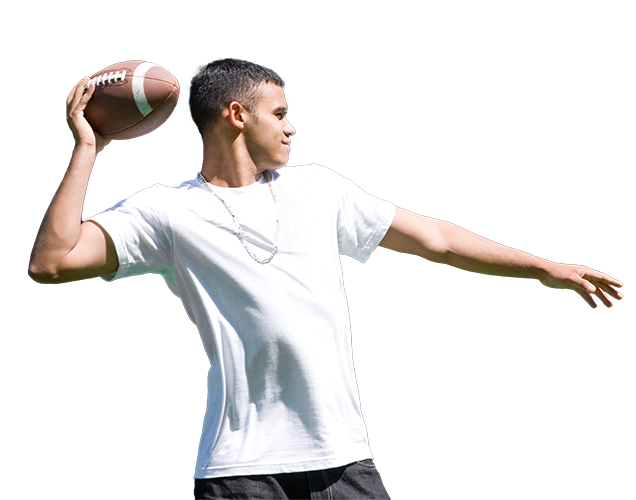
One of our areas of special interest is in the evaluation and mechanical assessment of overhead athletes. Our physical therapists and athletic trainers have been fortunate over the years to work with many throwers ranging from little leaguers to major leaguers.
Through a comprehensive exam, which includes an assessment of throwing mechanics (from feet to hands), joint mobility, flexibility, posture, muscle motor control, and strength, we are able to identify potential problem areas and provide the appropriate treatment or remedial plan to help the athlete return to a safe, efficient, more successful level of play. Prominent surgeons and professional team physicians around the country who refer athletes to Shoreline Physical Therapy understand our fervor for treating overhead athletes and appreciate the experience and skill level that our staff provides their patients. Whether you’re a high school shortstop suffering from elbow pain or a minor league prospect in need of rehab following shoulder surgery, our physical therapists and athletic trainers can help.
To schedule your biomechanical throwing analysis, contact Shoreline Physical Therapy today!
Free Consultation
Not sure if physical therapy at Shoreline Physical Therapy is right for you?
We offer a free consultation to see if we would be a good fit for you!
Schedule your appointment today!

Naturally Relieve Your Aches & Pains Today With Our Free Ebooks!
Looking for ways to relieve your pain before seeing one of our physical therapists?