

Understanding Rotator Cuff Pain and Non-Surgical Relief Options
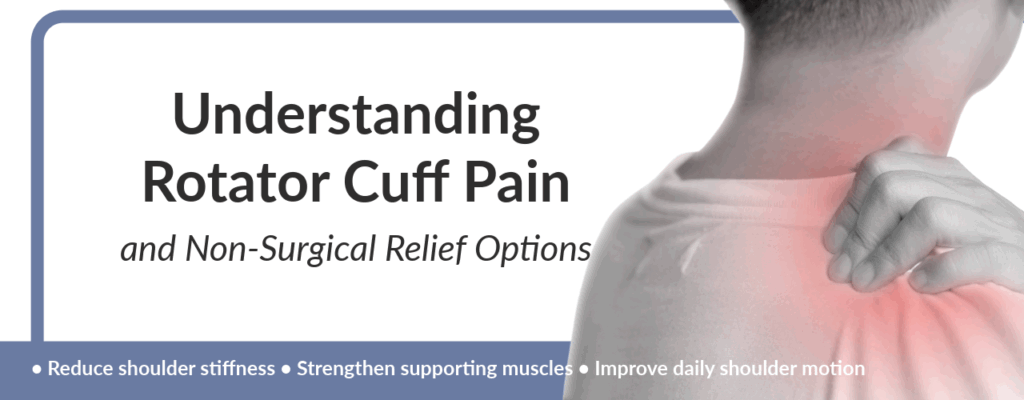
Your shoulder is one of the most mobile joints in the body, but that mobility comes with a cost. When the rotator cuff is irritated or injured, everyday tasks like reaching overhead, lifting, or even sleeping on your side can become painful. Many people worry that these issues will eventually lead to surgery, but most cases of rotator cuff pain respond well to conservative treatment. With the right plan, you can reduce pain, improve movement, and avoid more invasive options.
Let’s explore what causes rotator cuff discomfort, how it feels, and what non-surgical options are available to help you recover.
What Does Rotator Cuff Pain Feel Like?
The rotator cuff is a group of four muscles and their tendons that help stabilize and move your shoulder. These tissues allow you to lift, rotate, and control your arm. When they become irritated or inflamed, you may feel:
- Pain with reaching or lifting
- Discomfort when lying on the affected side
- Weakness or fatigue during overhead activity
- A dull ache that becomes sharp with certain movements
- Limited range of motion or stiffness in the shoulder
Some people also notice clicking or catching when moving the arm in certain directions. The pain can be constant or come and go depending on activity level.
Why Rotator Cuff Pain Happens in the First Place
Rotator cuff pain can develop for several reasons. It may result from repetitive movements, especially in sports, manual labor, or certain types of exercise. Poor posture, muscle imbalances, and limited shoulder mobility can also increase strain on these tissues. In other cases, a fall or sudden movement can cause a strain or small tear.
Common causes include:
- Overuse from overhead activity (e.g., swimming, painting, lifting)
- Poor shoulder positioning or posture
- Weak supporting muscles around the shoulder blade
- Natural tissue degeneration with age
- Trauma or impact injuries
The good news is that most cases are treatable without surgery, especially when addressed early.
Non-Surgical Relief for Rotator Cuff Pain
Rotator cuff pain does not always require surgery. In fact, many people recover fully with conservative care that focuses on movement, strength, and proper shoulder mechanics.
Effective non-surgical strategies include:
Manual therapy
- Hands-on techniques reduce tension, improve joint motion, and ease muscle guarding.
Targeted strengthening
- Exercises are used to build stability around the shoulder blade and rotator cuff. This improves control and reduces strain during movement.
Mobility work
- Gentle movement helps restore flexibility and reduce stiffness, especially in the early phase of recovery.
Postural correction
- Many rotator cuff problems stem from forward shoulders or poor alignment. Therapy includes guidance to improve positioning during work, exercise, or daily activity.
Education and load management
- Knowing how to modify activity, avoid aggravating movements, and pace your return to full activity is key to preventing setbacks.
These techniques work together to reduce inflammation, restore strength, and support long-term shoulder health.
How [site-name] Helps Patients Recover Without Surgery
At [site-name], we treat many patients with rotator cuff pain using a personalized, non-surgical approach. Every care plan starts with a thorough evaluation to understand your movement patterns, posture, strength, and specific symptoms.
Your recovery plan may include:
- A progression of exercises matched to your current level and goals
- Manual therapy to improve soft tissue and joint mobility
- Strategies for movement retraining and pain reduction
- Postural education and home support to extend results between sessions
We guide you step by step, adjusting the plan based on how your shoulder responds. Our goal is not just to reduce pain, but to help you move well and return to the activities you enjoy.
You Don’t Have to Live With Rotator Cuff Pain
Shoulder discomfort can limit your ability to work, exercise, and sleep. But it does not mean surgery is the only option. With focused care, many people recover from rotator cuff pain and avoid long-term issues.
If you’re ready to take the first step toward relief, the team at [site-name] is here to help. Contact us today to schedule an evaluation and begin your recovery plan!