

When Does a Sports Injury in Athletes Turn Into Chronic Pain?
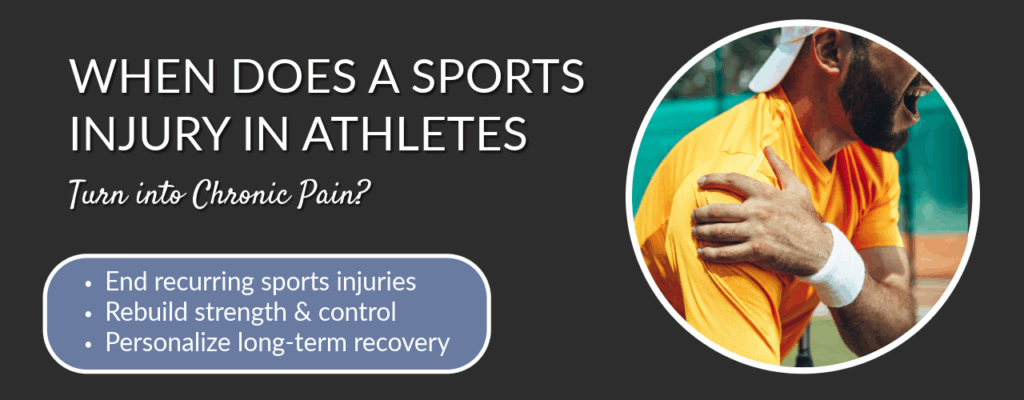
Most athletes expect to deal with aches, tight muscles, and even occasional injury. But what happens when the pain sticks around longer than expected? For some, a sprain, strain, or overuse injury doesn’t just heal and disappear. It lingers, flares up, or changes the way they move, even months later. At that point, they may no longer be dealing with a simple injury. They’ve entered the frustrating world of chronic pain that athletes face when recovery doesn’t go as planned.
The problem is, many athletes don’t know when to get help or what to believe about recovery. Let’s look at the most common myths that prevent athletes from getting long-term relief and the facts that can keep you moving forward.
Spotting the Misinformation in Sports Recovery
It’s normal to feel some pain or discomfort during training. But there’s a line between expected soreness and a pain pattern that keeps coming back. Misunderstanding that difference can lead to delays in care and more complicated recoveries.
Below are five common myths that affect chronic pain athletes, along with the truth behind each one.
Myth 1: “If you can still play, it’s not serious.”
Fact: Just because you can push through doesn’t mean you should. Many athletes compensate for pain without realizing it. These altered movement patterns often load the wrong joints or muscles, leading to longer-term dysfunction. Continuing to train or compete on an unresolved injury can turn an acute problem into a chronic one that becomes much harder to fix.
Myth 2: “Pain means the injury isn’t healing.”
Fact: Pain and tissue damage do not always match. In fact, many athletes with chronic pain have fully healed structures but still feel discomfort due to nerve sensitivity, altered muscle coordination, or changes in how their brain interprets movement. Recovery isn’t just about physical tissue; it involves retraining the whole system.
Myth 3: “Chronic pain athletes just need to stretch more.”
Fact: Stretching may provide short-term relief, but it is rarely enough to resolve chronic issues. Overstretching irritated tissues can even make symptoms worse. What athletes often need is guided mobility, controlled loading, and better movement control, not more aggressive stretching routines.
Myth 4: “Rest is always the answer.”
Fact: While rest is important in the early phase of an injury, too much rest can slow healing. For chronic pain athletes, long-term inactivity leads to deconditioning, weakness, and reduced joint control. The better solution is to gradually reintroduce movement under supervision, using pain-informed loading strategies.
Myth 5: “All athletes bounce back at the same pace.”
Fact: Recovery is different for every athlete. Factors like injury history, sport demands, age, biomechanics, and mental stress all play a role. There’s no one-size-fits-all timeline. Trying to match someone else’s recovery pace often leads to re-injury or frustration. Personalized care is key.
How [site-name] Helps Chronic Pain Athletes Recover Smarter
Chronic pain athletes benefit most from care that goes beyond rest and passive treatment. At [site-name], we start with a full movement and history assessment to understand how your body has adapted and how it can change for the better.
Your treatment plan may include:
- Movement retraining to restore confidence and control
- Strength programming that respects tissue healing and function
- Manual therapy to improve mobility and reduce guarding
- Education on pain science and pacing
- Return-to-sport progressions designed for your specific activity
We don’t just help you get out of pain. We help you return to your sport with confidence, energy, and trust in your body again.
Let’s Keep You in the Game for the Long Run
If you’ve been dealing with the same issue for months or if pain keeps coming back no matter what you do, you’re not just unlucky. You may be one of many chronic pain athletes who need a new approach.
At [site-name], we help athletes break out of the cycle of pain, rebuild their strength, and regain their edge. Reach out today to take the first step toward lasting recovery.